

Is Freeze Dried Candy Processed Food?
Table of Contents
- What the Freeze-Drying Process Actually Does to Candy
- Are Freeze Dried Snacks Actually Healthy?
- The Nutritional Value of Freeze Dried Candy
- Is Freeze Dried Candy Considered Ultra-Processed Food?
- Reading the Label: Ingredients, Additives, and What to Look For
- Home Freeze-Drying vs. Industrial Processing
- Frequently Asked Questions
Last Updated: October 2, 2026
What the Freeze-Drying Process Actually Does to Candy
Is freeze dried candy processed food? Yes, by definition. But that label covers everything from pre-washed salad bags to cheese puffs, so it tells you almost nothing useful. What matters is which kind of processing, and what it does to the candy itself.
Freeze-drying is a preservation method, not a recipe for chemical reinvention. At Kelly's Pantry & Pawtry, shoppers staring at a bag of puffed, neon-colored candy ask this constantly. The honest answer sits between "it's still candy" and "it's not the same product you started with."
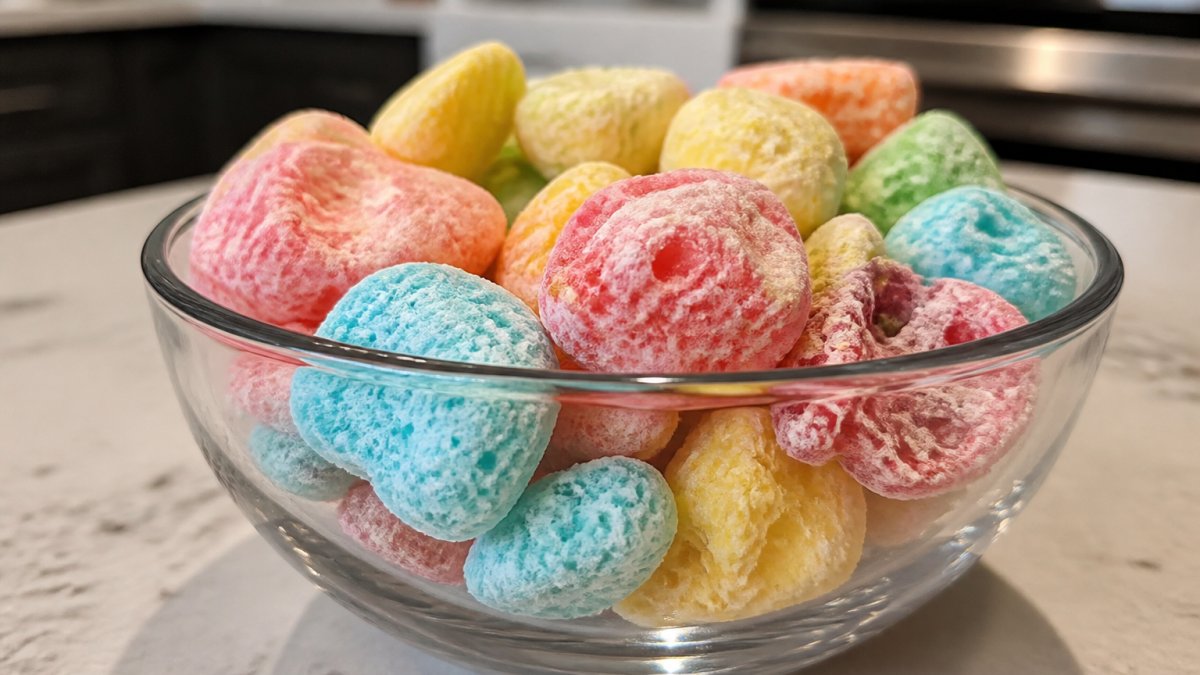
Here's the short version: freeze-drying removes water. It doesn't add preservatives, and it doesn't chemically transform sugar into something new. The candy you get out is the candy you put in, minus moisture, plus air.
Sublimation: How Ice Becomes Vapor Without Melting
Sublimation is the process where frozen water transitions directly from solid ice to vapor, skipping the liquid stage entirely. In candy production, this happens inside a vacuum chamber where pressure drops low enough that ice never has a chance to melt.
The candy is frozen, then placed in that chamber. As pressure falls, the ice sublimates and the vapor is pulled away, leaving a dry, rigid structure that holds the candy's original shape at a fraction of the weight.
This is why freeze-dried candy feels so light. Most of what you're holding is air where water used to be.
Why Candy Puffs Up in the Vacuum Chamber
The puffed appearance comes from the same physics: as moisture leaves, the sugar matrix that once held water expands into the empty space, creating a crunchy, airy texture that shatters rather than chews.
Not every candy puffs the same way. Gummies and chewy candies expand dramatically because they hold more water to begin with. Hard candies change less. This is texture transformation in its purest form, driven by moisture removal rather than added ingredients.
Are Freeze Dried Snacks Actually Healthy?
Are freeze dried snacks actually healthy? That depends on what's being freeze-dried. Freeze-drying fruit concentrates its natural sugars and nutrients; freeze-drying candy concentrates sugar. The process is neutral; the starting ingredient isn't.
This is where marketing gets slippery. A brand can slap "freeze-dried" on a bag and let shoppers assume "health food." It doesn't. Freeze-dried candy is still candy, with the same sugar content as the original, just lighter and crunchier.
The U.S. Food and Drug Administration's guidance on food processing makes a useful distinction here: processing describes what's done to food, not whether the result is nutritious. A freeze-dried strawberry and a freeze-dried gummy bear both go through processing. Only one of them is a fruit.
Preservation vs. Chemical Transformation
The key distinction is preservation versus chemical transformation. Preservation keeps food stable by removing what spoils it, usually water. Chemical transformation changes molecular structure through additives, heat, or industrial reactions.
Freeze-drying is preservation. No stabilizers, synthetic ingredients, or additives are required for the process to work, and the candy's sugar, flavor, and color stay largely intact because low temperatures don't degrade them the way high-heat dehydration can.
That said, "no additives needed" doesn't mean "no additives present." Some freeze-dried candy products include flavorings or colorings added before processing.
The Nutritional Value of Freeze Dried Candy
The nutritional value of freeze dried candy is nearly identical to the original on a per-gram-of-sugar basis, but water removal changes the math. Freeze-drying strips out roughly 80 to 98 percent of a candy's water weight. What's left is the same sugar, flavor compounds, and calories per gram of actual candy, in a fraction of the volume.
Sugar Content, Caloric Density, and Glycemic Impact
Freeze-drying does not lower sugar content. It concentrates it by removing water, so gram for gram, freeze-dried candy carries the same sugar load as the original, but the serving you actually eat is bigger. A standard 1-ounce (28-gram) serving of original gummy candy might be about 8 to 10 pieces. The same 28 grams of freeze-dried gummies can be 20 to 30 pieces, because each piece is mostly air.
What the Process Does and Doesn't Preserve
Freeze-drying is gentle on heat-sensitive compounds. Because it runs at low temperatures, well below freezing during the drying phase, it avoids the thermal degradation of high-heat dehydration. In fruit-based products, water-soluble vitamins like vitamin C and antioxidants survive better than in oven-dried or air-dried fruit, a real advantage for freeze-dried strawberries and blueberries.
Is Freeze Dried Candy Considered Ultra-Processed Food?
Freeze dried candy is not automatically classified as ultra-processed food, but the classification depends on the full ingredient list, not the drying method. The Nova classification system, developed at the University of São Paulo and widely used by public health agencies, sorts foods into four groups based on the purpose and extent of industrial processing, not nutrient content, and not how "natural" a product sounds.
How Food Processing Classification Works
The Nova system groups foods by purpose of processing rather than by nutrient content:
| Nova Group | What It Covers | Freeze-Dried Candy Fit |
|---|---|---|
| Group 1 | Unprocessed or minimally processed foods | Freeze-dried fruit only |
| Group 2 | Processed culinary ingredients | Rarely applies |
| Group 3 | Processed foods | Simple freeze-dried candy made from a short ingredient list |
| Group 4 | Ultra-processed foods | Candy with added flavorings, colorings, or stabilizers |
A Practical Label-Reading Guide
You don't need a food science degree to estimate where a bag of freeze-dried candy falls. Read the label like a classifier:
- Count the ingredients. Five or fewer, with recognizable names, usually signals Group 3. A list that runs past ten, especially with items you can't pronounce, leans Group 4.
- Look for cosmetic additives. Colors (Red 40, Yellow 5, Blue 1, Yellow 6), artificial flavors, and non-sugar sweeteners like sucralose or aspartame are Nova Group 4 markers.
- Check for texture and shelf-life additives. Stabilizers, emulsifiers (soy lecithin, polysorbate 80), and preservatives (potassium sorbate, sodium benzoate, BHA, BHT) are Group 4 signals.
- Watch for "natural flavors." A legal catch-all covering dozens of compounds. Not automatically Group 4, but it means the flavor wasn't simply the original ingredient.
- Compare the serving size to reality. If one serving is 8 pieces but the bag holds 60, the manufacturer knows most people eat more than 8. A marketing cue, not a classification cue, but worth noting.
The Bottom Line on Classification
Most freeze-dried candy sits in Group 3, with some products crossing into Group 4 depending on additives. The freeze-drying step is a preservation technique, it removes water, it doesn't add anything. Classification is determined by the candy that went in, not the process that dried it. Want a Group 3 product? Start with a short ingredient list. If the bag lists dyes, synthetic flavors, and preservatives, it's Group 4 regardless of how the water was removed.
Reading the Label: Ingredients, Additives, and What to Look For
The label tells you more than the front of the bag ever will. A short ingredient list usually means simpler processing. A long list of stabilizers, synthetic ingredients, and additives signals a more heavily processed product.
Here's a quick label-reading checklist:
- Count the ingredients. Fewer than five is a good sign.
- Look for added colors (Red 40, Yellow 5, Blue 1).
- Check for artificial flavors or "natural flavors" without specifics.
- Note the sugar content per serving, not per bag.
- Compare serving size to how much you'd actually eat.
Home Freeze-Drying vs. Industrial Processing
Home freeze-drying and industrial processing use the same principle but produce different results. Home units run smaller batches with less precise vacuum control, so texture and moisture removal vary more batch to batch.
Frequently Asked Questions
Is it healthier to eat freeze-dried candy?
Freeze-dried candy is not automatically healthier than regular candy. The freeze-drying process removes moisture, which concentrates the sugar and calories by weight. A 30-gram serving of freeze-dried candy may contain more sugar than the same weight of original candy because the water weight is gone. However, freeze-drying preserves flavor compounds and aroma better than heat-based dehydration, so you may feel satisfied with a smaller portion. Check the nutritional labeling for sugar content per serving.
Does the freeze-drying process change the nutritional profile of candy?
Freeze-drying is a preservation method, not a chemical transformation. It removes moisture through sublimation in a vacuum chamber, leaving the sugar, flavor compounds, and most nutrients intact. The main change is concentration: because water is removed, the remaining sugar and calories are denser per ounce. Vitamin C and some heat-sensitive nutrients survive better than in thermal processing, but candy rarely contains significant vitamins to begin with. The food matrix shifts from chewy to crunchy, but the ingredient list stays the same.
What is the definition of ultra-processed food in the context of candy?
Ultra-processed food typically refers to products made with industrial ingredients and additives that you would not find in a home kitchen, such as synthetic colors, stabilizers, and emulsifiers. Regular candy often falls into this category. Freeze-dried candy made from a single candy source without added synthetic ingredients is still processed, but it may avoid the ultra-processed label if the ingredient list is short. Read the label for additives, stabilizers, and synthetic ingredients to make your own call.
How does freeze-drying affect the sugar content in sweets?
Freeze-drying does not add or remove sugar. It removes water, which means the sugar becomes more concentrated by weight. If a piece of candy is 50% sugar before freeze-drying, it might be 80% sugar after, because the water weight is gone. This affects caloric density and glycemic impact if you eat the same number of pieces. A smaller portion of freeze-dried candy can deliver the same sugar load as a larger portion of the original. Always compare servings by weight, not volume.