

Prevent Freeze Dried Candy From Crumbling: 2026 Guide
Table of Contents
- Why Freeze Dried Candy Crumbles: Common Causes
- How to Store Freeze Dried Candy for Maximum Freshness
- Best Packaging for Freeze Dried Candy
- How to Package Freeze Dried Candy for Shipping
- Handling and Post-Processing Tips to Prevent Crumbs
- Structural Integrity by Candy Type
- Frequently Asked Questions
Last Updated: September 25, 2026
Why Freeze Dried Candy Crumbles: Common Causes
Freeze dried candy crumbles when it takes on moisture, gets knocked around, or faces sudden temperature swings. The candy is mostly air after processing, so its structure is light and fragile. We hear the same complaint from new customers: "It showed up as powder." The fix starts with knowing what breaks it.
Moisture and Rehydration
Rehydration is the top enemy of any freeze-dried treat. The candy pulls water straight out of the air, and once that happens, the crunch turns soft and the piece collapses. Humidity is the culprit, not heat.
- Open bags left out for even an hour can start to soften
- Humid kitchens and bathrooms speed up the damage
- A sealed bag that was opened and not closed again loses its protection fast
Physical Impact and Vibration
Every jolt matters. A dropped box or a bumpy delivery truck sends shock through the bag, and light pieces crack under the pressure. Impact resistance is low because the candy is thin-walled and airy.
- Shipping is where most breakage happens
- Loose candy rattling inside a bag grinds against itself
- Stacking heavy boxes on top crushes the bottom layers
Temperature Fluctuations
Heat and cold swings cause thermal shock. The candy expands and contracts, and tiny cracks form. Those cracks turn into full breaks later, even if the piece looks fine at first.
- A hot car or a cold garage both cause problems
- Moving candy from a cold truck to a warm room too fast adds stress
- Steady room temperature is always safer than a fluctuating spot
How to Store Freeze Dried Candy for Maximum Freshness
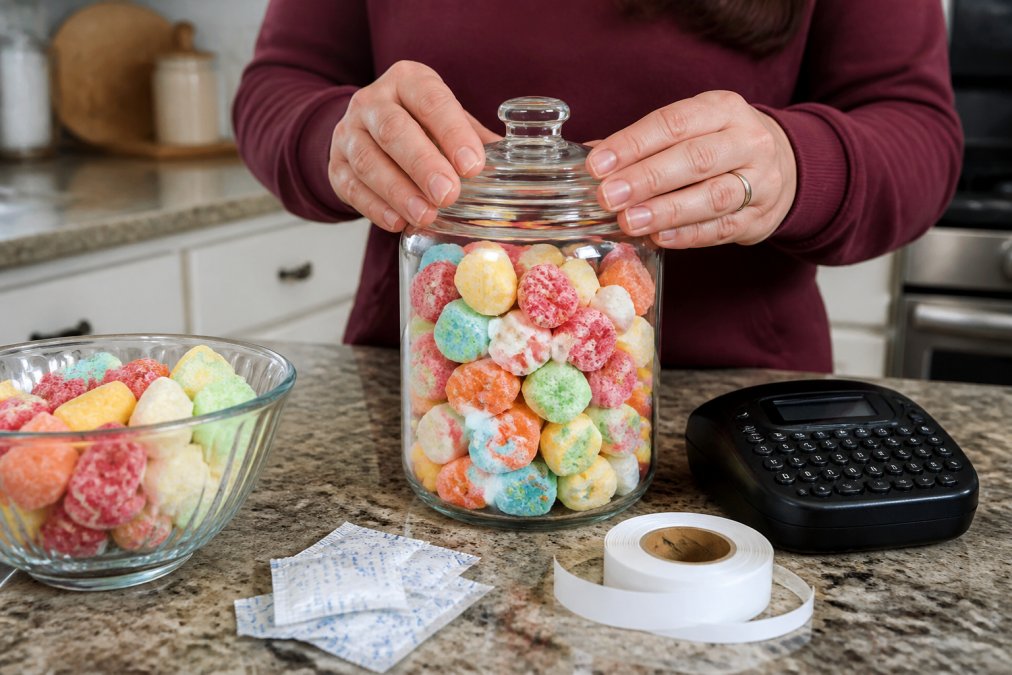
The best way to keep freeze-dried candy fresh is to seal it in an airtight container, add a desiccant packet, and store it in a cool, dark, dry spot. This simple setup blocks the moisture and movement that cause most damage.
Choosing the Right Airtight Container
An airtight container is the foundation of good storage. Glass jars with rubber gaskets work well. So do heavy plastic containers with locking lids. Skip thin zip bags for long-term storage.
- Glass jars with clamp lids block air best
- Mylar bags with a heat seal work for bulk storage
- Mason jars are easy to check and refill
Using Desiccant Packets and Oxygen Absorbers
Desiccant packets soak up moisture inside the container. Oxygen absorbers remove the air that speeds up flavor loss. Together, they extend shelf life and protect texture.
- One desiccant packet per small jar is usually enough
- Replace packets every few months for long storage
- Keep packets away from direct contact with candy
Ideal Storage Environment
A cool, dark cupboard beats a sunny shelf every time. Humidity levels should stay low. A dry pantry or closet works better than a kitchen counter near the stove.
- Aim for a steady room temperature
- Keep containers away from windows and heat sources
- Store off the floor to avoid dampness
Best Packaging for Freeze Dried Candy
The best packaging for freeze-dried candy pairs a moisture barrier with protective cushioning. Mylar bags handle the barrier job, while bubble wrap or foam handles the physical protection. You need both to stop crumbs.
Protective Cushioning Materials
Cushioning absorbs the shocks that crack candy in transit. The material matters as much as the amount.
Layering Order That Works
The order of layers does more for breakage rates than the total amount of padding. A common pattern that holds up in transit:
- Line the inner box floor with a closed-cell foam sheet.
- Place the sealed Mylar bag or jar on the foam.
- Wrap the bag loosely in food-safe bubble wrap, loose, not tight, so the candy can shift slightly without pressing on itself.
- Cap the top with a second foam sheet.
- Fill any remaining gap in the outer box with crumpled paper or air pillows.
Vacuum Sealing vs. Mylar Bags
Vacuum sealing pulls out air and creates a tight seal, which is great for moisture control. But the suction can crush fragile pieces. Mylar bags with a gentle seal protect texture better for brittle candy.
| Method | Moisture Protection | Crush Risk | Best For |
|---|---|---|---|
| Vacuum seal | High | High | Sturdy, dense candy |
| Mylar bag | High | Low | Fragile, airy candy |
| Glass jar | Medium | Low | Home storage |
| Zip bag | Low | Low | Short-term use |
How to Package Freeze Dried Candy for Shipping
To package freeze-dried candy for shipping, arrange pieces in a single layer, cushion every side, and use a box-in-box setup. This protects against the vibration and impact that cause most delivery damage.
Single-Layer Tray Arrangement
A single-layer tray arrangement stops pieces from stacking and pressing on each other. One layer means no weight on top, so nothing gets crushed from above.
- Use a flat tray or box base
- Leave small gaps so pieces do not rub
- Add a soft liner under the layer
Box-in-Box Method
The box-in-box method places your sealed candy box inside a larger shipping box. Cushioning fills the gap between them. The outer box takes the hits, and the inner box keeps the candy safe.
- Seal candy in a Mylar bag or jar
- Place it in a small inner box with cushioning
- Set the inner box inside a larger outer box
- Fill all gaps with bubble wrap or paper
- Seal and label the outer box clearly
Handling and Post-Processing Tips to Prevent Crumbs
Careful handling after processing protects the candy before it ever reaches a package.
Why the Cooling Phase Is the Fragile Window
When the cycle finishes, the candy is still equilibrating. Residual moisture is redistributing through the piece, and the structure has not fully stabilized. Warm candy is more flexible, so it bends and cracks instead of holding its shape. Move it too soon and you are handling pieces at their weakest.
A Post-Processing Sequence That Holds Up
- Let the chamber come to room temperature before opening. Opening a cold chamber in a warm room pulls humid air straight onto the candy. That condensation is enough to soften the surface.
- Rest the trays, undisturbed, until fully cool. Do not stack trays on top of each other during this phase, the weight presses on the pieces below.
- Move pieces with soft tools. Silicone spatulas, plastic scoops, or a wide soft brush. Metal scoops and tongs concentrate force on a single point and crack airy pieces.
- Work in small batches. The longer a batch sits exposed, the more moisture it picks up. Handle a tray at a time, not the whole run.
- Seal immediately after cooling. Every minute of open air is a minute of rehydration. Have containers and desiccant packets ready before you start handling.
Handling Habits That Cut Breakage
- Keep work surfaces dry and clean. A damp counter transfers moisture on contact.
- Wear nitrile gloves rather than bare hands, skin oils and moisture transfer to the candy.
- Avoid working near open windows, dishwashers, or anything producing steam.
- Do not pour candy from one container to another. Scoop it, or slide it on a liner.
- If a piece does break, remove the crumbs. Loose crumbs act like grit and grind against intact pieces in the same bag.
What to Do With a Batch That Already Crumbled
Broken pieces are not a total loss. Crumbs can be used as a topping, folded into baked goods, or sold as a discounted "crushed" grade if you label it honestly. The key is to separate them from intact pieces immediately, leaving crumbs in with whole candy accelerates further breakage during shipping.
Structural Integrity by Candy Type
Not all candy holds up the same way. Structural integrity depends on candy density and texture. Dense, chewy candies puff into sturdier pieces. Light, airy candies turn brittle and break easily.
- Gummy candies puff up and stay fairly tough
- Hard candies become very brittle and shatter-prone
- Chocolate-based pieces soften and lose shape faster
- Taffy-style candy keeps a chewy core and holds together well
Frequently Asked Questions
Why does my freeze dried candy turn into powder?
Freeze dried candy turns to powder when its brittle structure absorbs moisture from the air, making it soft before crumbling under light pressure. Physical impact during handling or shipping also breaks the delicate puff. To prevent this, always store candy in an airtight container with desiccant packets and handle it gently. Keeping humidity levels below 60% and using protective cushioning during transport further reduces powdering.
What is the best way to package freeze dried candy to prevent breakage?
The best packaging for freeze dried candy combines an airtight barrier with physical cushioning. Start with a Mylar pouch to block moisture and oxygen. Then place the bag in a rigid box with bubble wrap or foam inserts, ensuring the candy can't shift. For shipping, use a single-layer tray arrangement and double-box if needed. This approach protects against both rehydration and impact, keeping pieces intact.
Does humidity affect the texture of freeze dried candy?
Yes, humidity is the top enemy of freeze dried candy. The candy is hygroscopic, meaning it pulls moisture from the air. Even brief exposure to high humidity can cause rehydration, turning crunchy pieces soft and chewy. Once soft, they crumble easily. Store candy in an airtight container with desiccant packets, and avoid opening the container in humid rooms. A dehumidifier can help maintain ideal storage conditions.
Can you fix freeze dried candy that has already crumbled?
Once freeze dried candy has crumbled, you cannot restore its original shape. However, you can still enjoy the crumbs as a topping for ice cream, yogurt, or baked goods. To prevent future crumbling, focus on proper storage and handling. Use airtight containers with desiccant packets, minimize physical shock, and package shipments with ample cushioning. These steps keep your candy crunchy and intact from the start.
Freeze-dried candy is fragile by nature, but the right storage and shipping habits keep it crunchy and whole. Kelly's Pantry & Pawtry crafts each batch to deliver that light, flavor-packed crunch our customers love. Our carefully crafted treats come in a wide variety of flavor-packed snacks, and every order is packed with care to arrive intact. Shop with Kelly's Pantry & Pawtry and enjoy a fun, flavorful snacking experience from the first crunch to the last.